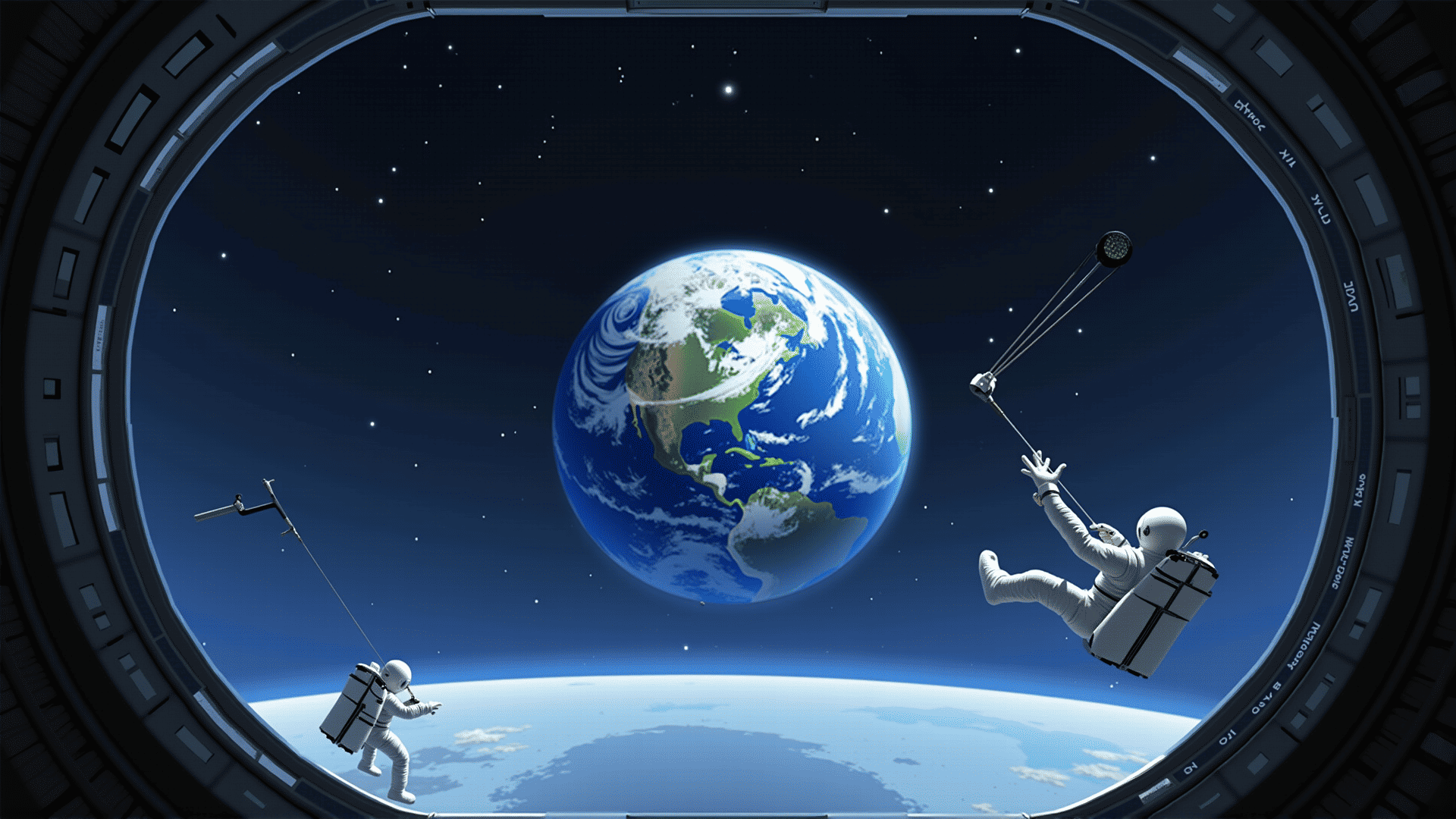
The dawn of space exploration marked one of humanity's most ambitious endeavors, igniting the imaginations of millions as we set our sights on the celestial wonders beyond our planet. With each passing decade, advancements in technology have brought us closer to realizing dreams that were once confined to the realm of science fiction. Today, we stand on a new frontier, poised to expand our reach into the cosmos with groundbreaking research and innovation in space technology and exploration.
The modern era of space exploration is characterized by a collaborative effort between government agencies, private companies, and international partnerships. This synergy has fostered an environment ripe for rapid technological advancements. One such area of development is the advancement of launch capabilities. Reusable rocket technology, pioneered by companies like SpaceX with their Falcon and Starship rockets, has drastically reduced the cost of sending payloads to space, making it more accessible than ever before.
In addition to revolutionizing launch systems, space agencies are investing in the development of advanced propulsion technologies. Nuclear thermal and electric propulsion are being explored as feasible solutions to decrease travel times for missions to distant destinations such as Mars or even the outer planets. These propulsion systems promise to cut journey lengths significantly, reducing the resources needed for such missions and opening up the possibility of manned deep-space exploration.
Spacecraft autonomy and artificial intelligence also play a pivotal role in the future of space exploration. As missions venture further into space, the communication delay with Earth increases, necessitating autonomous systems capable of making real-time decisions. AI-driven navigation, scientific experimentation, and problem-solving are being integrated into spacecraft design, potentially transforming how missions are conducted.
The quest for knowledge about our solar system's neighbors has driven significant advancements in the study of celestial bodies. Planetary science missions continue to uncover the secrets of planets like Mars, Jupiter, and Saturn, while missions such as the James Webb Space Telescope promise to peer deeper into the universe than ever before, seeking to unravel mysteries such as the origins of galaxies and the existence of potentially habitable exoplanets.
Furthermore, the exploration of the Moon is undergoing a renaissance with the Artemis program, which aims to return humans to the lunar surface and establish a sustainable presence by the end of this decade. The Moon is envisioned not just as a destination but as a proving ground for technologies necessary for future missions to Mars and beyond. Its exploration could pave the way for resource utilization, such as the extraction of water ice for life support systems and fuel production.
One of the most exciting aspects of contemporary space exploration is the possibility of discovering signs of life beyond Earth. Missions such as the Europa Clipper, which will investigate the ice-covered ocean of Jupiter's moon Europa, and the upcoming Dragonfly mission to Saturn's moon Titan, are designed to explore environments where life could potentially exist.
As we continue this journey into the stars, the commitment to scientific discovery and technological innovation will be crucial. The challenges are immense, but the potential rewards—ranging from new scientific insights to technological breakthroughs—promise to enrich our understanding of the universe and redefine what humanity is capable of achieving.
Space exploration is not just a venture into the unknown; it is a testament to human curiosity and resilience. As we forge ahead into this new era, the possibilities are limitless, and the adventure, unforgettable.